
Case Study
ShipMate
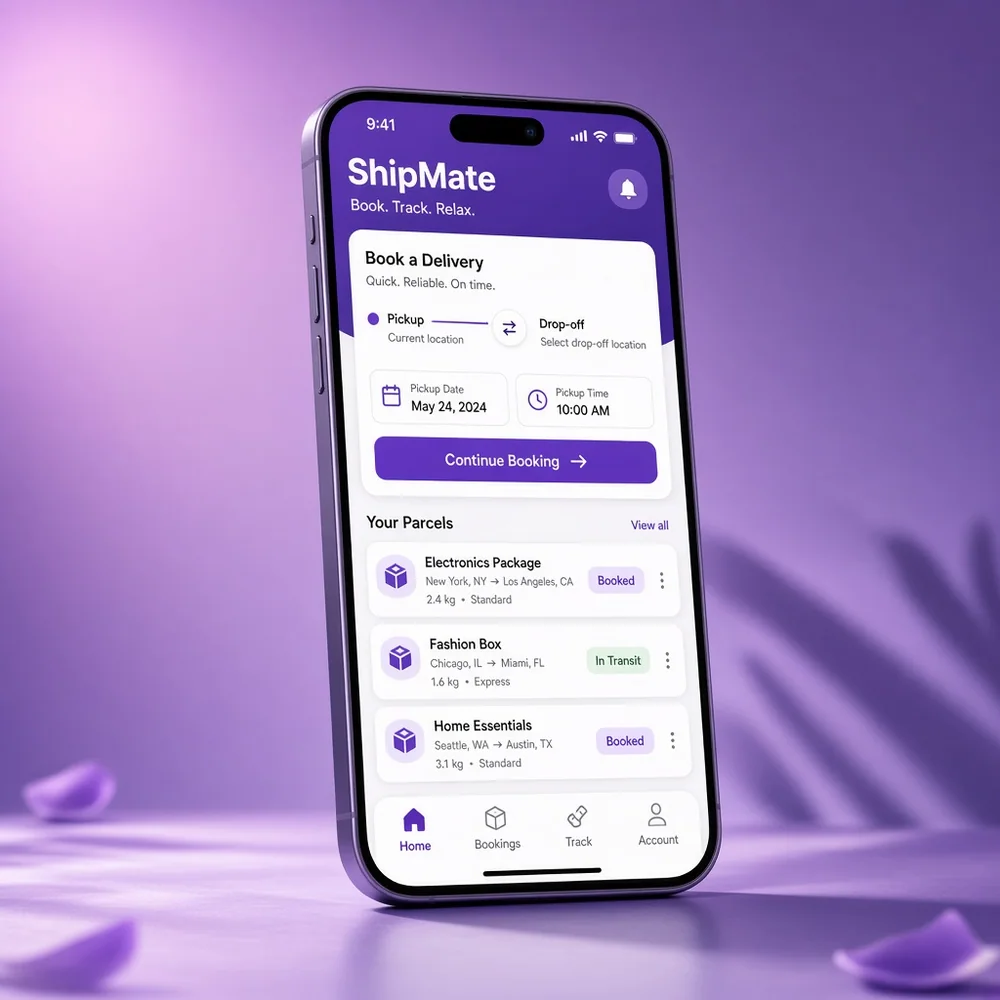
ShipMate is a courier delivery platform that connects customers, couriers, dispatch teams, and administrators through streamlined booking, tracking, and delivery management.
- 5.5 MonthsDelivery Timeline
- 7 SpecialistsProject Team
- 12 IntegrationsConnected Interfaces
Project Overview
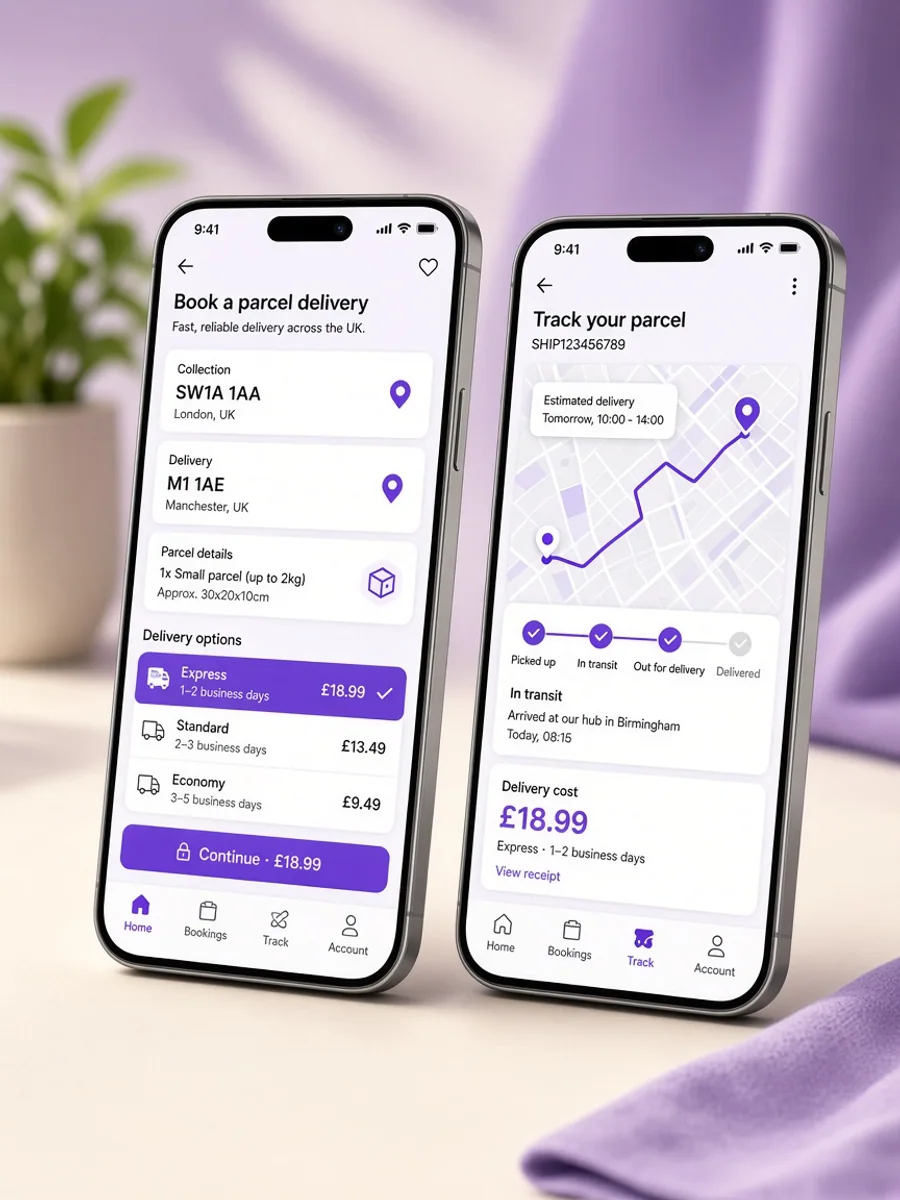
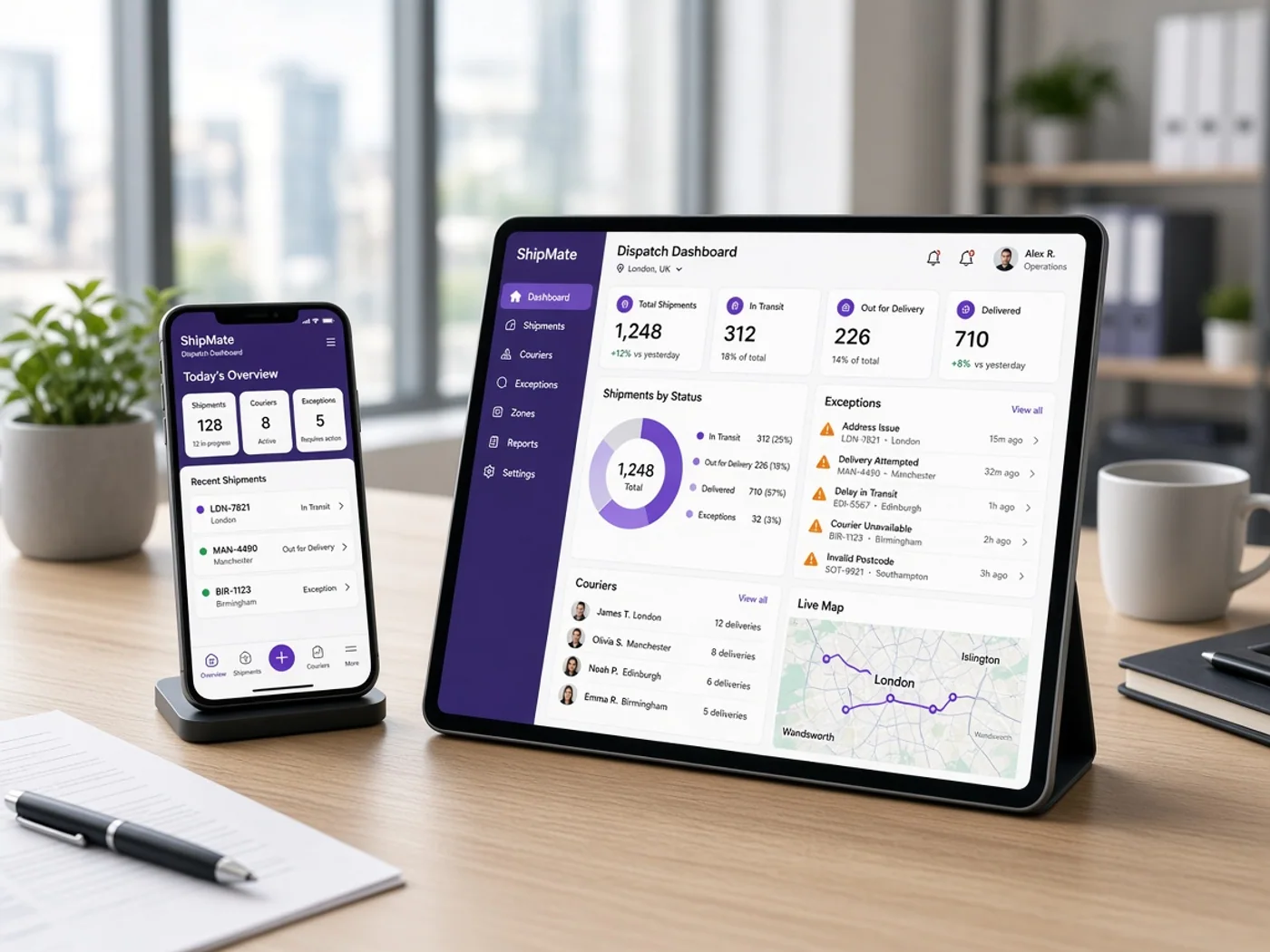
ShipMate is a courier delivery platform built to simplify parcel booking, dispatch, tracking, and delivery management. Customers can create profiles, enter shipment details, schedule pickups, select delivery options, and track parcels through a structured experience. Couriers can view assigned jobs, access pickup information, update delivery status, and confirm completed shipments. Dispatch teams can coordinate deliveries, manage assignments, review shipment activity, and handle operational exceptions. The product was created to connect customer, courier, and operational workflows within one platform. Abhineh Infotech supported product planning, UI UX design, application development, integrations, testing, and deployment.
Project Idea
ShipMate was designed to bring parcel booking, courier assignment, shipment tracking, and delivery operations into one connected platform for more structured logistics management.
Courier delivery involves multiple steps, from shipment creation and pickup scheduling to courier assignment, transit updates, delivery confirmation, and exception handling. ShipMate needed to reduce coordination gaps while giving customers clear shipment visibility and operational teams better control over active deliveries.
Abhineh Infotech connected shipment booking, courier assignment, route information, status updates, notifications, delivery confirmation, and administrative workflows through a shared architecture. This allowed shipment information to move consistently between customer, courier, dispatch, and administrative interfaces throughout the delivery lifecycle.
The product principle focused on clarity, speed, and confidence. Customers needed understandable shipment information, couriers needed quick access to assigned jobs, and dispatch teams needed reliable operational visibility. Focused interfaces helped each participant complete delivery related tasks without unnecessary navigation.

Challenges
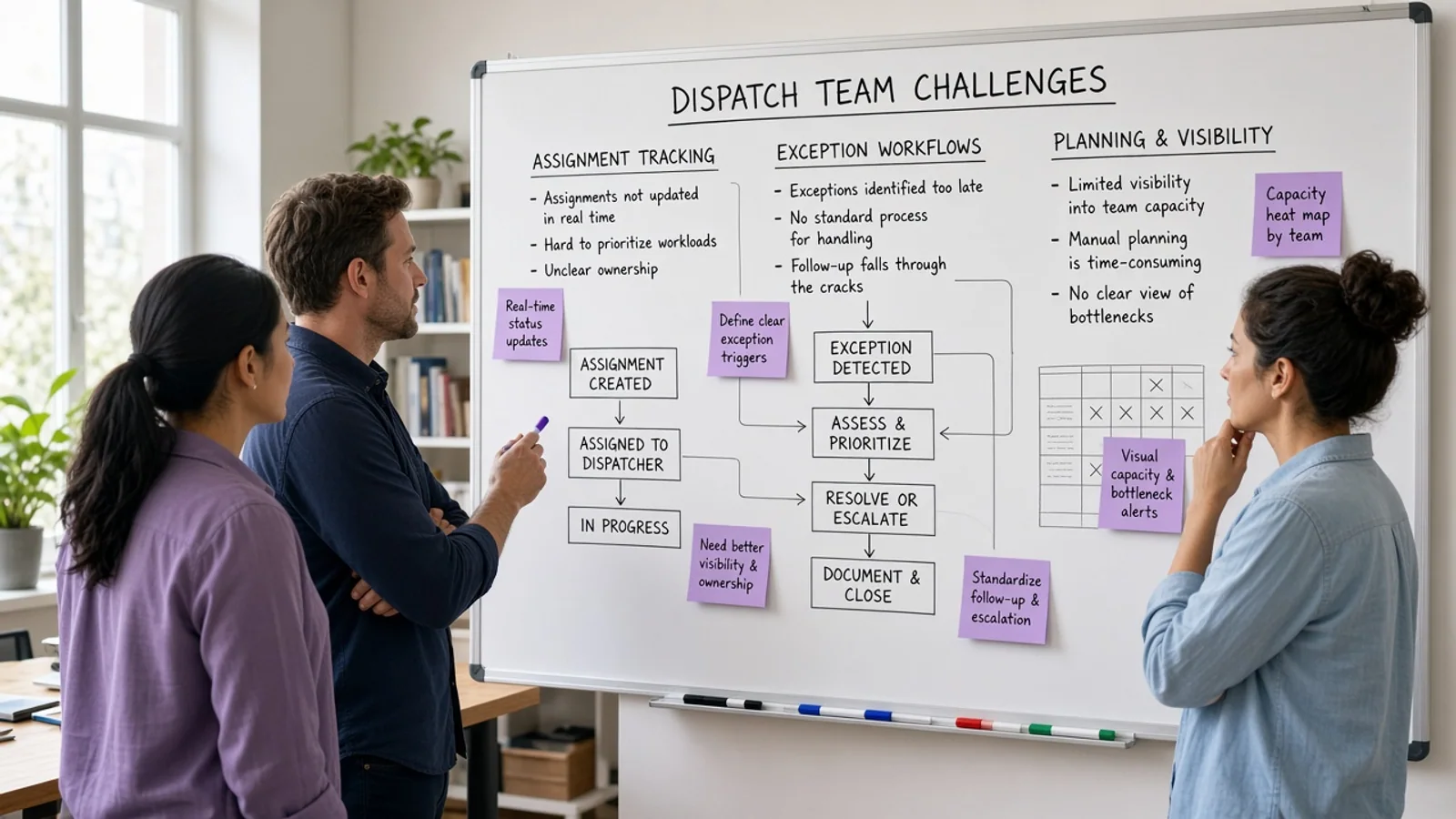
ShipMate supported customers, couriers, dispatch teams, and administrators with different responsibilities and permissions. Customers required simple shipment creation and tracking, couriers needed delivery instructions, while dispatch teams required broader controls for assignments, schedules, exceptions, and delivery monitoring.
Courier operations generate varied information across parcels, addresses, shipment types, pickup schedules, courier assignments, tracking events, delivery statuses, and proof of delivery. The platform needed structured data handling to keep shipment information consistent across customer and operational interfaces.
Delivery activity can increase substantially during peak shipping periods, promotional campaigns, weekends, and seasonal demand. ShipMate required efficient APIs, background processing, caching, and scalable infrastructure to support shipment creation, assignment, tracking, and status updates during higher delivery volumes.
Project Milestones We Achieved
| Milestone | Tasks | Timeline | Responsible |
|---|---|---|---|
| Discovery and Planning | Mapped customer, courier, dispatch, and administrator journeys, shipment requirements, pickup rules, tracking needs, integrations, and technical architecture. | Month 1 | Product and Engineering Team |
| UI/UX Design | Designed shipment booking, parcel details, courier jobs, tracking, dispatch controls, notifications, and administrative interfaces. | Month 2 | UI UX Design Team |
| Core Development | Built authentication, shipment creation, courier management, dispatch services, tracking, delivery confirmation, APIs, and dashboard foundations. | Month 3 to 4 | Application Development Team |
| Integrations and Testing | Connected mapping, notification, payment, and tracking services while validating delivery workflows and performing functional and performance testing. | Month 5 | Integration and QA Team |
| Launch and Optimization | Prepared production infrastructure, completed final validation, monitored delivery activity, resolved issues, and refined shipment workflows. | Month 5.5 | Engineering and Delivery Team |
Project Features
ShipMate connects parcel booking, courier assignment, shipment tracking, delivery confirmation, notifications, and dispatch operations through one structured courier delivery platform.
Customer Profiles
Customers can create accounts, manage shipment preferences, and maintain relevant information used across courier booking and delivery journeys.
Parcel Booking
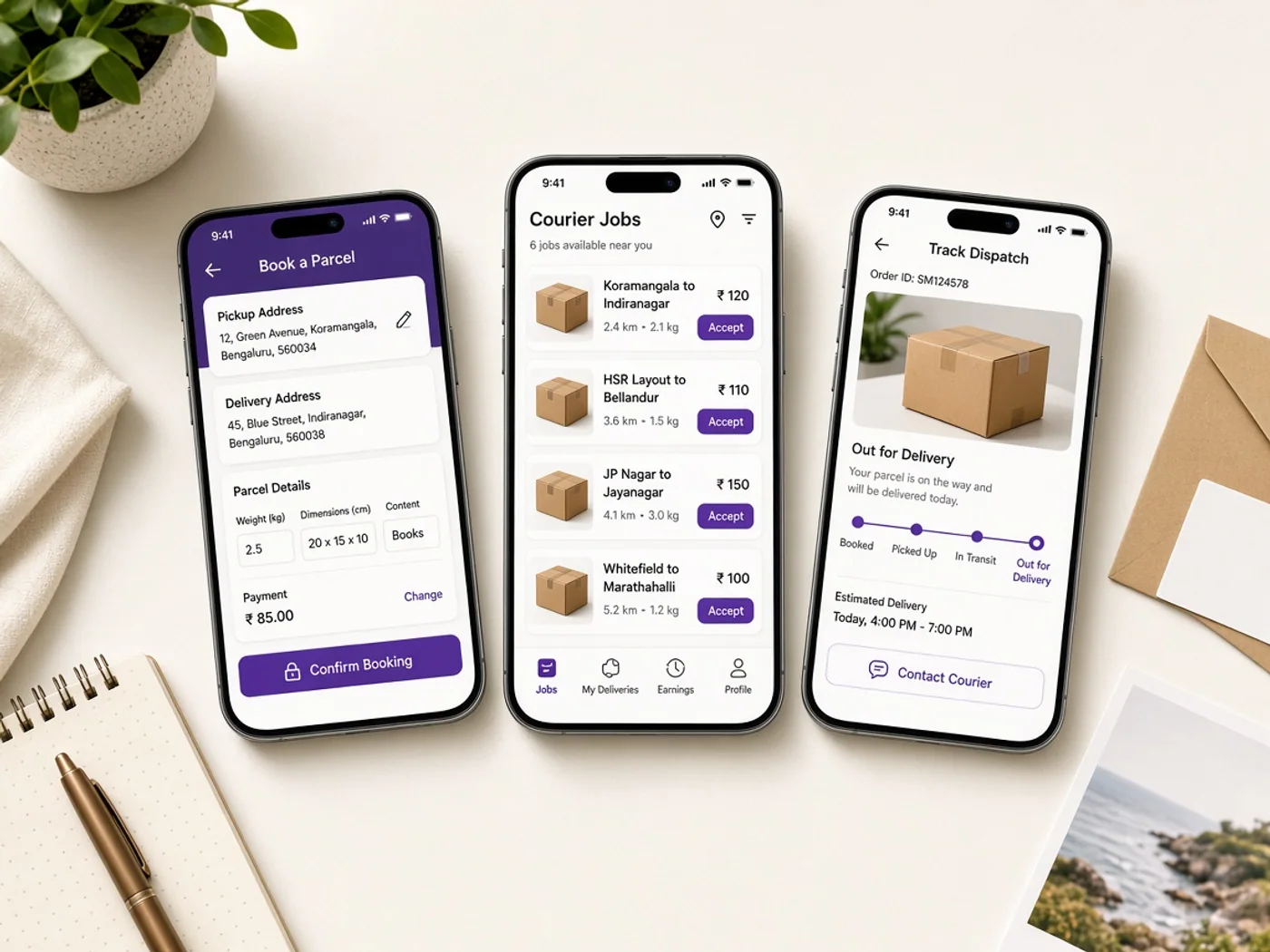
Customers can enter parcel details, pickup information, destination details, delivery preferences, and schedule requirements through a focused booking flow.
Courier Assignment
Dispatch teams can assign delivery jobs while couriers receive relevant parcel, pickup, destination, and delivery information.
Shipment Tracking
Customers and operations teams can follow parcel progress through tracking events and delivery status updates throughout the shipment lifecycle.
Delivery Confirmation
Couriers can update delivery status and record completion information after successfully handing over shipments to recipients.
Dispatch Dashboard
Operations teams gain central visibility into shipments, couriers, assignments, tracking activity, exceptions, and delivery performance.
Results
ShipMate launched as a connected courier delivery platform covering parcel booking, courier assignment, shipment tracking, delivery confirmation, notifications, and dispatch management. The delivered system brought core shipment workflows into one structured digital environment.
Centralised dispatch tools gave operations teams clearer visibility into active shipments, courier assignments, delivery status, and exceptions. This created more consistent workflows for coordinating daily deliveries and responding to changes throughout the shipment lifecycle.
Customers gained a more organised journey from parcel booking through delivery completion, with clearer access to shipment information and tracking updates. Couriers also received focused tools for managing assigned jobs and updating delivery progress efficiently.
The platform established a foundation for continued logistics development. Its architecture can support additional delivery services, route planning capabilities, courier management tools, shipment options, reporting functions, and operational features as ShipMate expands.

Development Process
Explore
- Journey Mapping
- Logistics Research
- Requirement Analysis
- Wireframe Creation
- UI UX Design
- Flow Validation
Implement
- Mobile Development
- Backend Development
- API Development
- Mapping Services
- Tracking Services
- Notification Services
Execute
- Functional Testing
- Load Testing
- Security Review
- Production Setup
- Delivery Monitoring
- Workflow Optimization
Typography & colors
Plus Jakarta Sans
ABCDEFGHIJKLMNOPQRSTUVWXYZ
abcdefghijklmnopqrstuvwxyz
1234567890
Primary
#7C3AED
Secondary
#C4B5FD
Tertiary Color
#EDE9FE
Icons Color
#64748B
Text Color
#0F172A
Background Color
#FFFFFF
App Visuals
ShipMate
210 jobs
Dispatch
Board
Courier
Job
Exceptions
Today
Open cases
ReviewAlerts
Ship notices
Almost there
Create profile
Tech Stack
Kotlin supported native Android experiences for couriers and customers requiring reliable mobile performance. Laravel powered backend services and APIs for shipments, couriers, dispatch, and tracking. MySQL managed structured delivery data, while RabbitMQ supported asynchronous shipment and notification processing. Microsoft Azure provided cloud hosting, monitoring, storage, and scalable infrastructure.
- Kotlin
- Laravel
- MySQL
- RabbitMQ
- Microsoft Azure
Build A Connected Courier Delivery Platform
Talk with Abhineh Infotech about connecting shipment booking, courier management, tracking, dispatch, notifications, and delivery operations.
Talk to Our Experts