
Case Study
Scootly
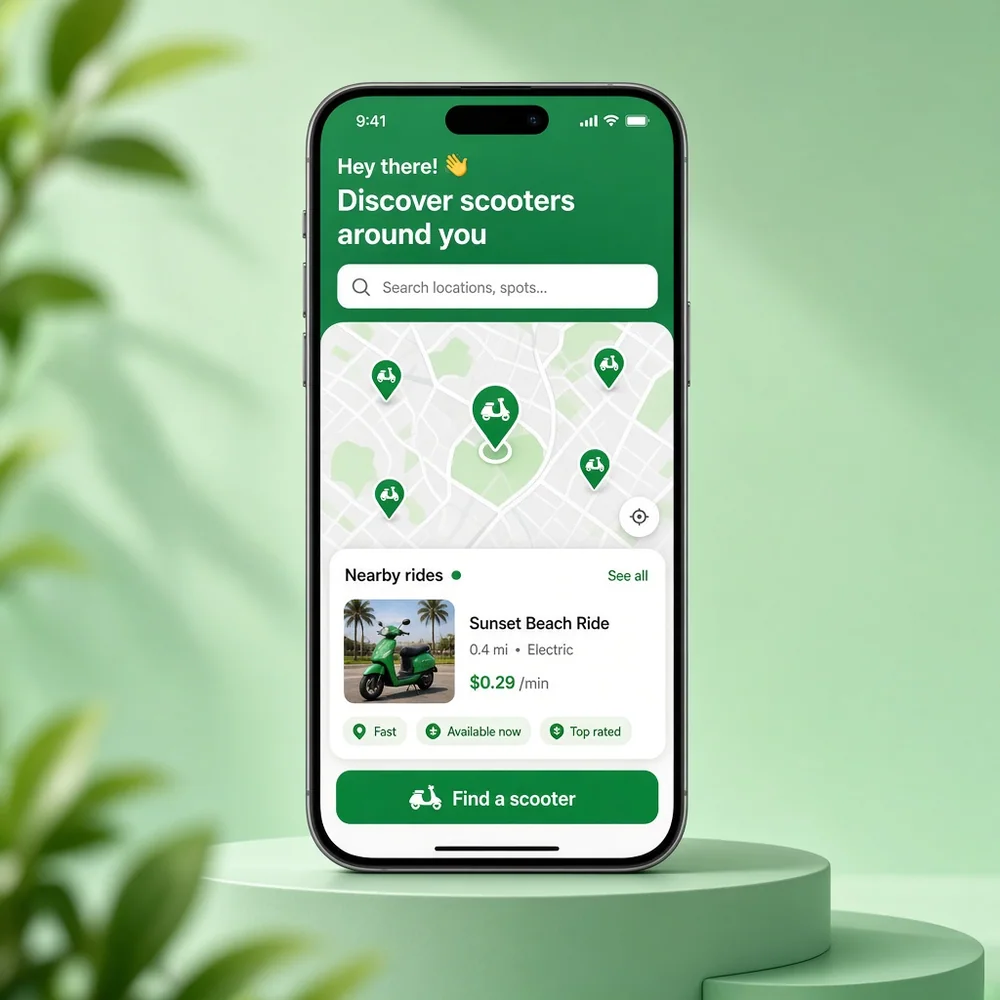
Scootly is an eScooter mobility platform that helps riders discover, unlock, pay for, and manage electric scooter journeys through a connected digital experience.
- 5 MonthsDelivery Timeline
- 7 SpecialistsProject Team
- 4 IntegrationsConnected Interfaces
Project Overview
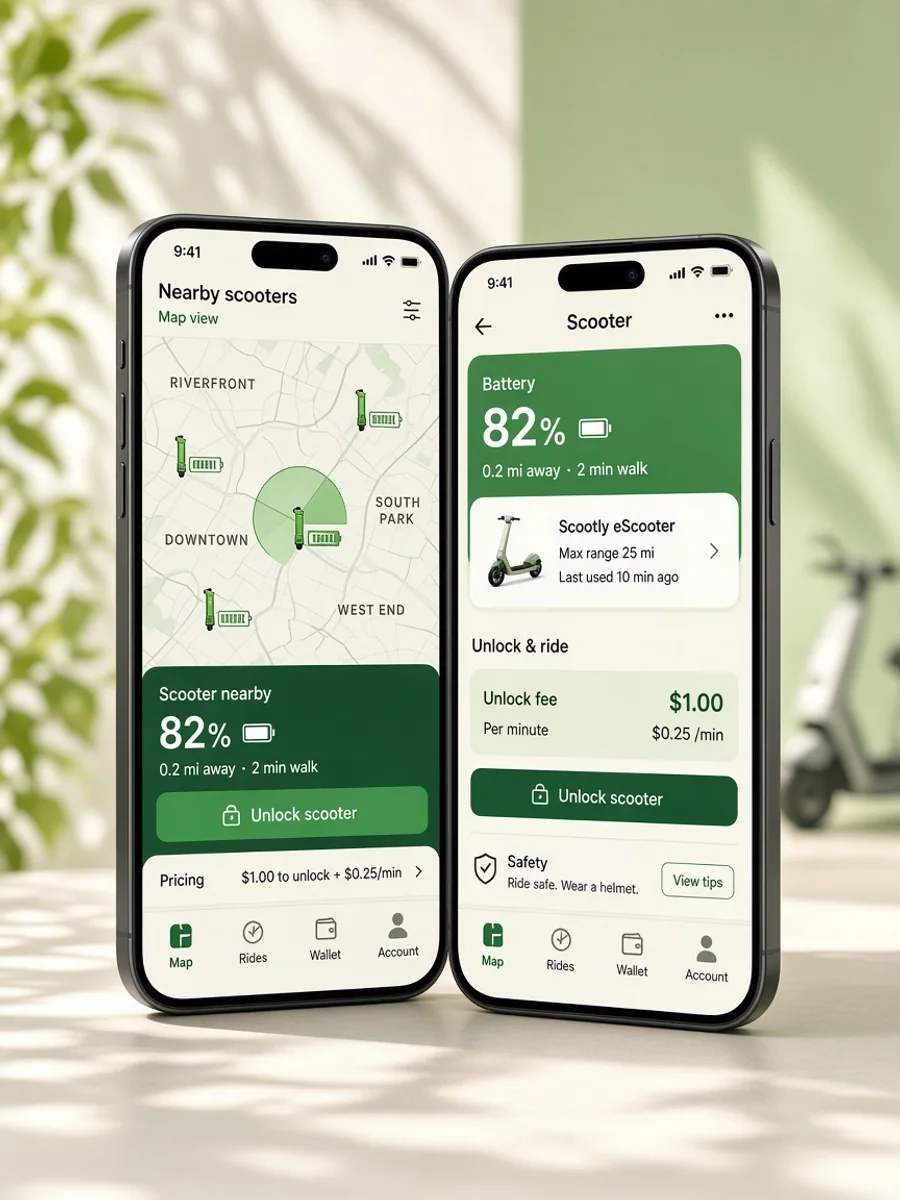
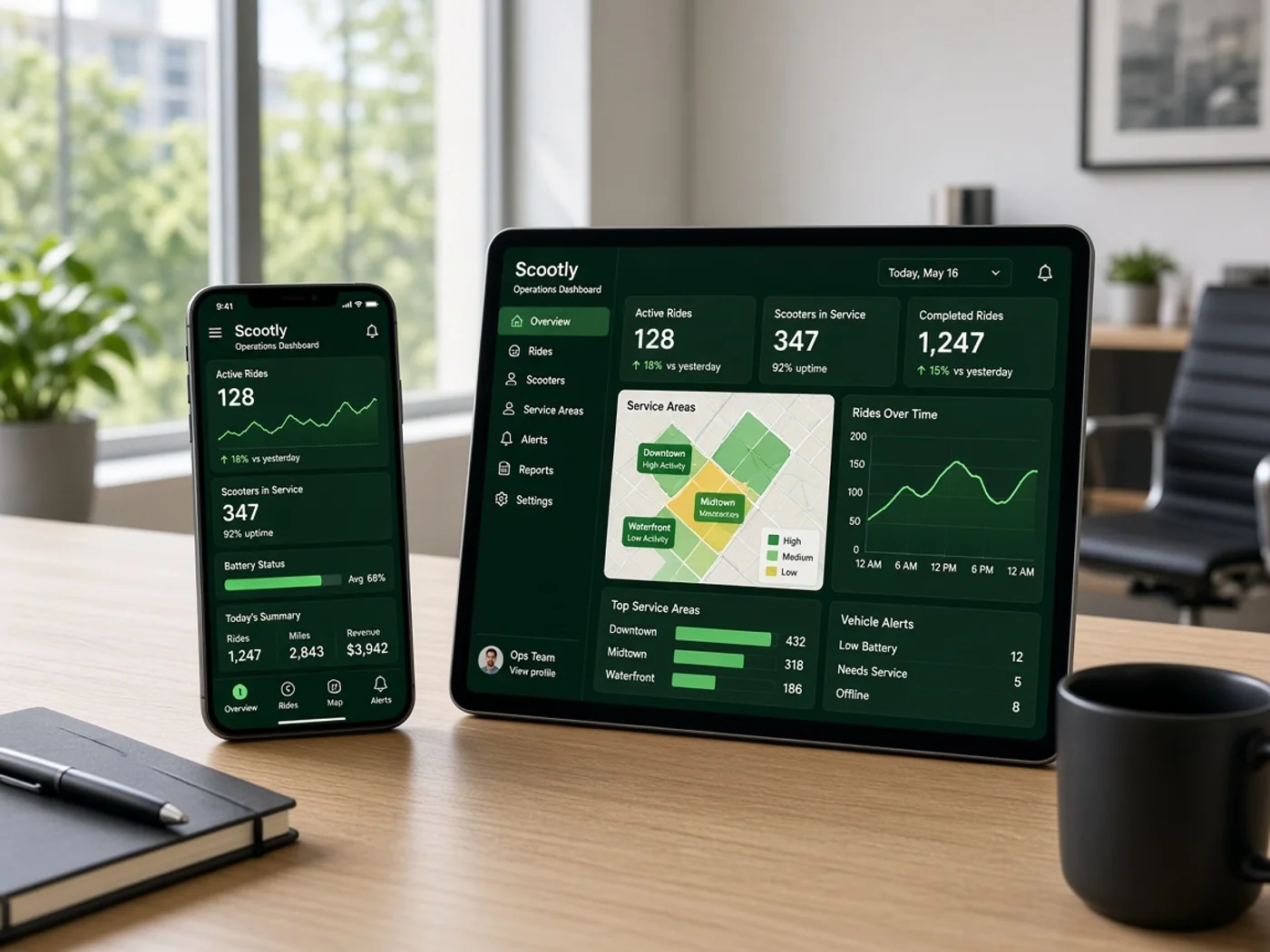
Scootly is an eScooter platform built to simplify short distance urban transportation for riders and operations teams. Riders can create profiles, locate available scooters, review vehicle information, unlock rides, manage payments, and monitor active journeys. Operations teams can manage scooters, rider accounts, ride activity, vehicle status, and service areas through an administrative interface. The platform was designed to connect the complete scooter journey from discovery and unlocking through payment and ride completion. Abhineh Infotech supported product planning, UI UX design, mobile development, backend services, integrations, testing, and deployment to create a structured mobility experience.
Project Idea
Scootly was designed to make short distance scooter journeys easier to access while giving operations teams practical controls for vehicles, riders, payments, and ride activity.
Traditional short distance transportation can involve unnecessary waiting, unclear vehicle availability, and disconnected payment processes. Scootly needed to give riders a straightforward way to find nearby scooters, understand ride information, unlock vehicles, and complete journeys without unnecessary steps.
Abhineh Infotech connected scooter discovery, vehicle availability, ride unlocking, payment processing, journey status, and administrative controls through a unified platform architecture. This allowed rider activity and vehicle information to move consistently between mobile interfaces, backend services, and operational tools.
The product principle focused on clarity, speed, and confidence. Riders needed immediate access to scooter availability, pricing, ride status, and payment information. Operations teams required clear visibility into vehicles and journeys. Focused screens and predictable workflows kept the experience easy to follow.

Challenges
Scootly served riders and operations teams with different requirements and access levels. Riders needed fast access to nearby scooters and active ride information, while operations teams needed broader controls for vehicles, accounts, rides, service areas, and platform activity.
Scooter platforms generate frequently changing information across vehicle availability, locations, battery levels, ride status, pricing, payments, and rider accounts. The system needed structured data handling to keep these updates consistent across rider applications and administrative interfaces.
Ride activity can increase significantly during commuting hours, weekends, and busy urban periods. Scootly required efficient APIs, location services, caching, and scalable infrastructure to maintain responsive scooter discovery, unlocking, payment processing, and ride status updates during higher usage.

Project Milestones We Achieved
| Milestone | Tasks | Timeline | Responsible |
|---|---|---|---|
| Discovery and Planning | Mapped rider and operations journeys, scooter requirements, unlocking flows, location needs, payment rules, service areas, and platform architecture. | Month 1 | Product and Engineering Team |
| UI/UX Design | Designed scooter discovery, vehicle details, ride unlocking, active journey, payment, account, and operations interfaces. | Month 2 | UI UX Design Team |
| Core Development | Built rider accounts, scooter management, availability, ride services, unlocking workflows, payments, APIs, and administrative foundations. | Month 3 | Application Development Team |
| Integrations and Testing | Connected location, payment, vehicle, and notification services while validating ride workflows and performing functional and performance testing. | Month 4 | Integration and QA Team |
| Launch and Optimization | Prepared production infrastructure, completed final validation, monitored ride activity, resolved issues, and refined scooter booking workflows. | Month 5 | Engineering and Delivery Team |
Project Features
Scootly combines scooter discovery, vehicle information, ride unlocking, payments, journey tracking, and fleet operations in one connected eScooter mobility platform.
Rider Signup and Profile
Riders can create accounts, manage personal information, and maintain payment and journey preferences through their profile.
Scooter Discovery
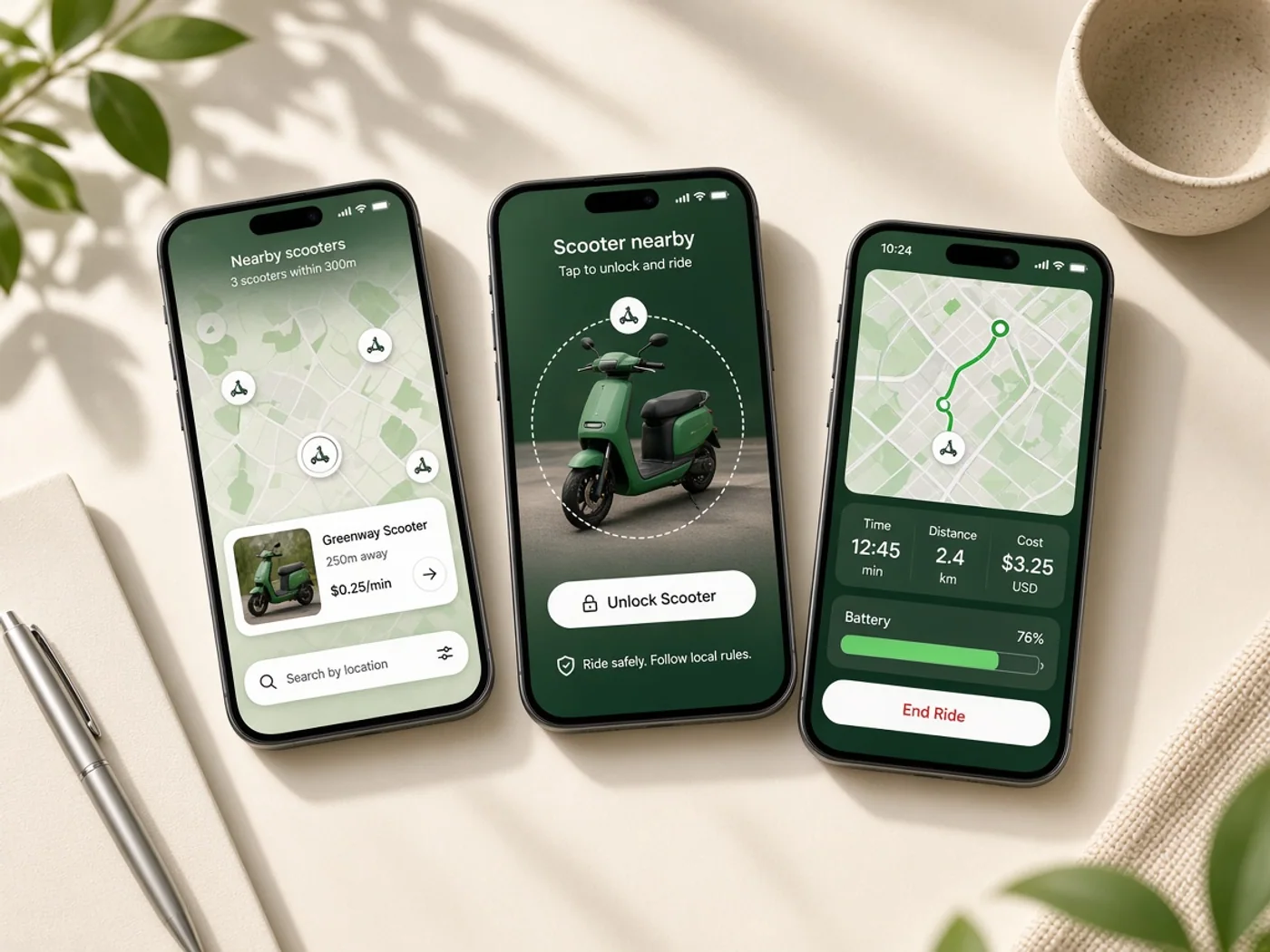
Riders can locate available scooters, review vehicle information, and select suitable scooters for their intended journey.
Ride Unlocking
Riders can start scooter journeys through a structured unlocking flow connected to vehicle availability and ride status.
Ride Tracking
Active journeys display ride status, duration, route information, and relevant trip details throughout the scooter session.
Payments and Receipts
Riders can manage ride payments and review transaction information through connected payment and receipt workflows.
Fleet Operations
Operations teams can monitor scooters, rider activity, vehicle status, rides, and service information through administrative controls.
Results
Scootly launched as a connected eScooter mobility platform covering rider accounts, scooter discovery, vehicle availability, unlocking, payments, ride tracking, and fleet operations. The delivered product brought key stages of the scooter journey into one structured experience.
Centralised fleet tools gave operations teams clearer visibility into scooter status, ride activity, rider information, and vehicle availability. This created more consistent workflows for monitoring daily mobility activity and handling routine operational requirements.
Riders gained a more direct journey from finding an available scooter through unlocking, riding, payment, and completion. Clear vehicle information and ride status helped users understand the journey while reducing unnecessary steps across the mobile experience.
The platform established a foundation for continued mobility expansion. Its architecture can support additional vehicle types, service areas, pricing models, ride plans, fleet controls, reporting capabilities, and rider features as Scootly develops its transportation offering.

Development Process
Explore
- Rider Journey Mapping
- Mobility Research
- Requirement Analysis
- Mobile Wireframes
- UI UX Design
- Flow Validation
Implement
- Mobile Development
- Backend Development
- API Development
- Location Services
- Payment Gateway
- Vehicle Services
Execute
- Ride Testing
- Load Testing
- Security Review
- Cloud Deployment
- Ride Monitoring
- Experience Optimization
Typography & colors
Plus Jakarta Sans
ABCDEFGHIJKLMNOPQRSTUVWXYZ
abcdefghijklmnopqrstuvwxyz
1234567890
Primary
#16A34A
Secondary
#4ADE80
Tertiary Color
#DCFCE7
Icons Color
#64748B
Text Color
#0F172A
Background Color
#FFFFFF
App Visuals
Scootly
36 nearby
Find
Scooters
Ride
In progress
Ops
Fleet
Active
OpenAlerts
Ride updates
Almost there
Create profile
Tech Stack
Kotlin supported native Android functionality for rider mobility features and device capabilities. Spring Boot powered backend services for rides, vehicles, accounts, and payments. MySQL managed structured platform data, while Apache Kafka handled event driven ride and vehicle updates. Microsoft Azure provided cloud infrastructure, deployment, monitoring, and scalable application services.
- Kotlin
- Spring Boot
- MySQL
- Apache Kafka
- Microsoft Azure
Build A Connected eScooter Mobility Platform
Talk with Abhineh Infotech about building scooter discovery, unlocking, payments, ride tracking, and fleet management experiences.
Talk to Our Experts