
Case Study
On Demand Taxi Platform
On Demand Taxi Platform helps riders book journeys, track drivers, complete payments, and manage trip history through one connected taxi booking experience.
- 8 MonthsDelivery Timeline
- 11 SpecialistsProject Team
- 8 InterfacesConnected Interfaces
Project Overview
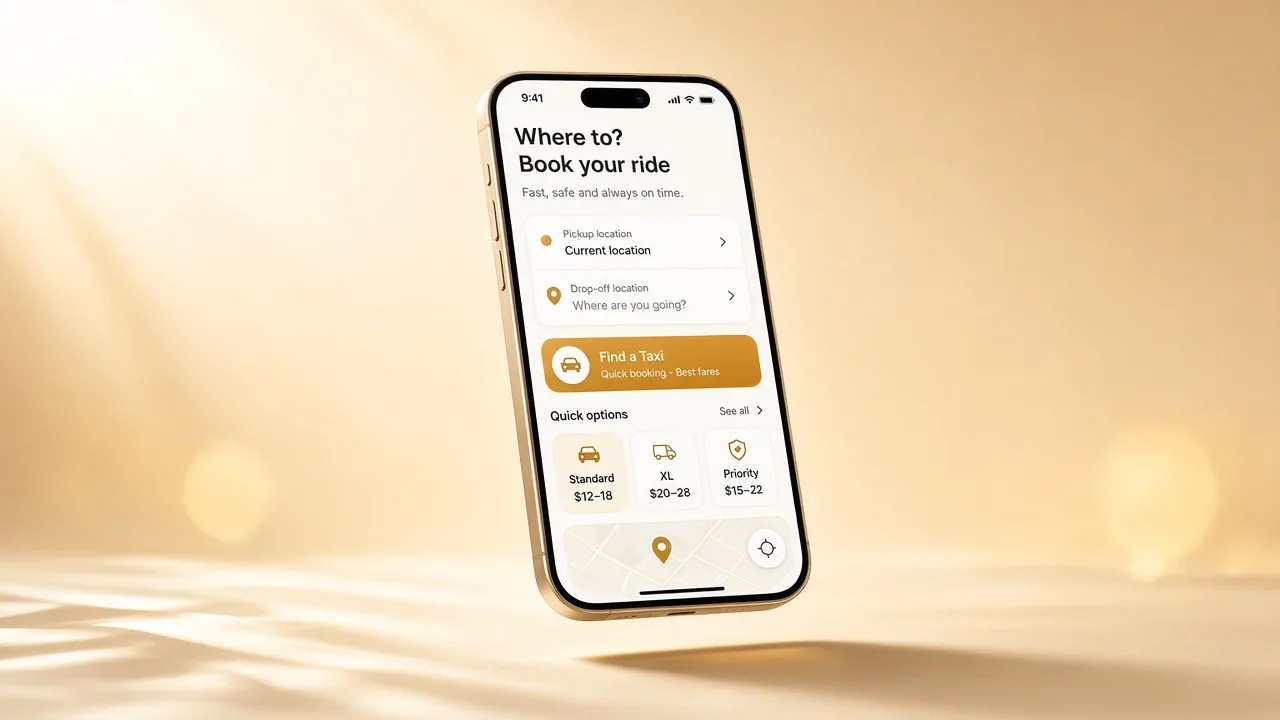
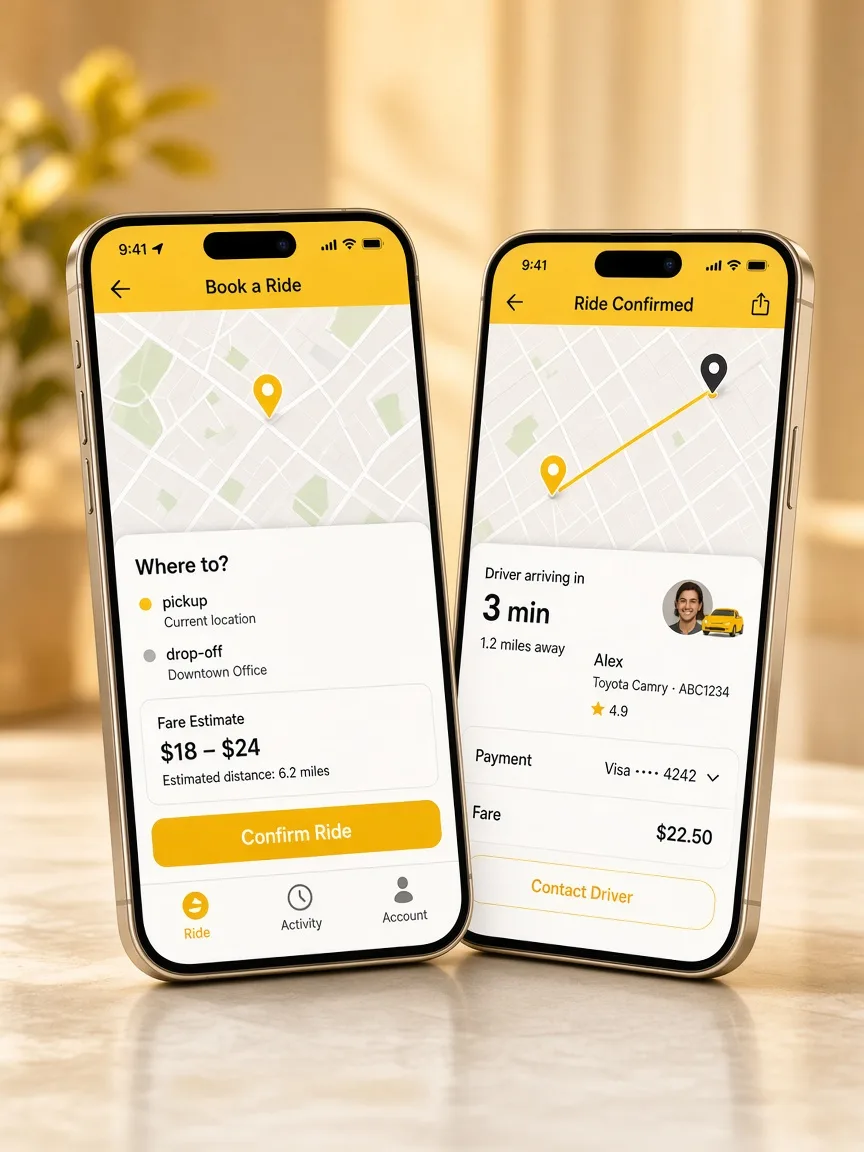
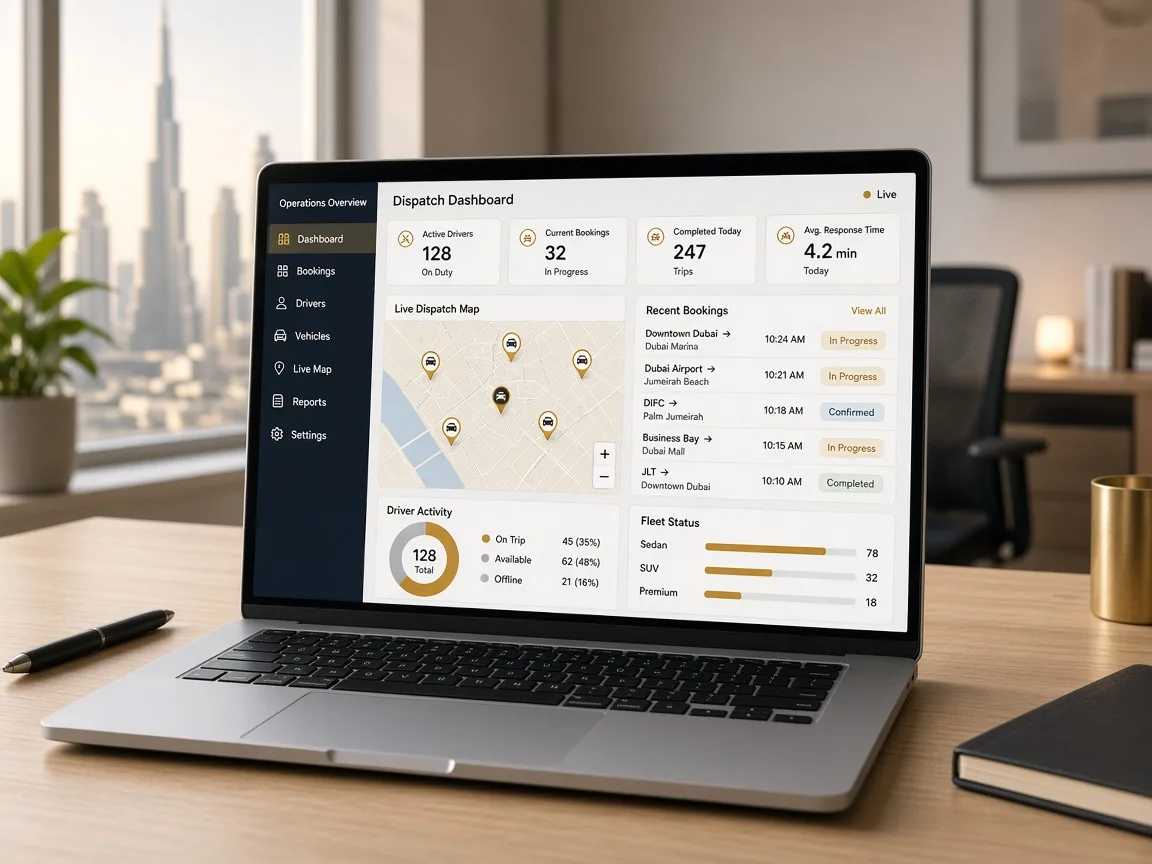
The On Demand Taxi Platform was built for a transportation operator managing city wide taxi bookings through one connected digital ecosystem. Riders can create accounts, set pickup and drop off locations, view fare estimates, request rides, track driver arrival, complete payments, and review trip history. Drivers can manage availability, accept or decline ride requests, follow navigation guidance, update trip status, and review daily earnings. Operations teams can manage riders, drivers, vehicles, documents, bookings, fares, payments, and live trip activity from a central dashboard. Abhineh Infotech handled product planning, UI UX design, mobile application development, backend services, mapping and dispatch logic, payment integration, testing, and deployment. The platform was designed to keep booking, dispatch, and payment journeys reliable during changing demand across the day.
Project Idea
The platform needed to connect riders, drivers, vehicles, and operations teams while keeping booking, dispatch, navigation, and payment journeys simple and predictable.
On demand taxi booking involves several connected workflows, from location selection and fare estimation to driver matching, trip start, navigation, trip completion, payment, and rating. Managing these activities across separate rider, driver, and operations tools can create delays and inconsistent trip information. The platform needed one consistent structure that kept every stage connected and easy to follow.
Abhineh Infotech connected rider booking, driver dispatch, live location tracking, fare calculation, payment processing, trip history, and operational controls through a unified architecture. Shared backend services allowed booking and trip information to move consistently between interfaces, helping drivers receive relevant requests while riders and operations teams saw accurate trip progress.
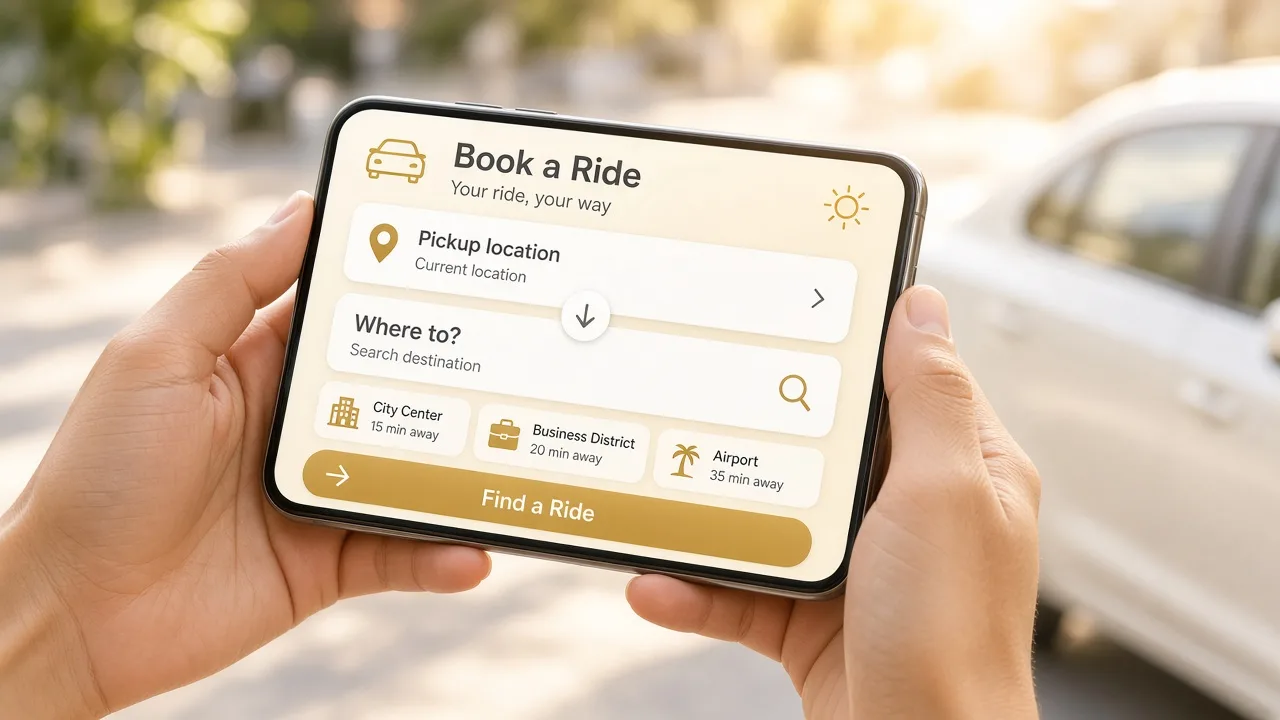
The product principle focused on clarity, speed, and confidence. Riders needed transparent fare and driver information, drivers needed quick request handling and navigation support, and operations teams needed live visibility across active trips. The interface structure kept important actions visible while reducing unnecessary steps across the complete ride journey.
Challenges
The platform supported riders, drivers, dispatch staff, and operations teams, each with different responsibilities and permissions. Riders required simple booking, drivers needed clear request and trip controls, dispatch staff needed assignment tools, and operations teams required broader visibility across fleet and booking activity.
Data varied across rider profiles, saved addresses, driver records, vehicle documents, service areas, fare rules, bookings, trip routes, payments, and cancellation reasons. The platform needed structured data management to keep location, fare, and trip information accurate and consistent while values changed continuously throughout each ride.
Ride demand can increase sharply during morning and evening commutes, weekends, airport arrivals, and event periods. The platform required efficient APIs, real time location updates, caching, scalable services, and reliable cloud infrastructure to maintain responsive booking, driver matching, navigation, payment, and monitoring workflows during higher activity.

Project Milestones We Achieved
| Milestone | Tasks | Timeline | Responsible |
|---|---|---|---|
| Discovery and Planning | Mapped rider, driver, dispatch, and operations journeys, defined booking requirements, fare rules, dispatch logic, integrations, and technical architecture. | Month 1 | Product and Engineering Team |
| UI/UX Design | Designed location selection, fare estimate, ride request, driver tracking, trip summary, driver app, dispatch, and operations interfaces. | Month 2 | UI UX Design Team |
| Core Development | Built authentication, rider and driver profiles, booking services, fare engine, dispatch matching, trip tracking, payment services, APIs, and management tools. | Month 3 to 5 | Application Development Team |
| Integrations and Testing | Connected mapping, navigation, payment, and notification services, validated dispatch and trip flows, tested APIs, and performed functional and performance testing. | Month 6 to 7 | Integration and QA Team |
| Launch and Optimization | Prepared production infrastructure, completed final validation, monitored live trip activity, resolved issues, and refined booking and dispatch journeys. | Month 8 | Engineering and Delivery Team |
Project Features
The platform combines rider booking, fare estimation, driver dispatch, live tracking, payments, and operational controls to support the complete on demand taxi lifecycle.
Rider Signup and Profile
Riders can create accounts, verify phone numbers, manage profiles, save frequent addresses, and access complete trip and payment history.
Location Search and Fare Estimates
Riders can search pickup and drop off points, review route options, compare vehicle categories, and see fare estimates before confirming a ride.
Driver Dispatch and Live Tracking
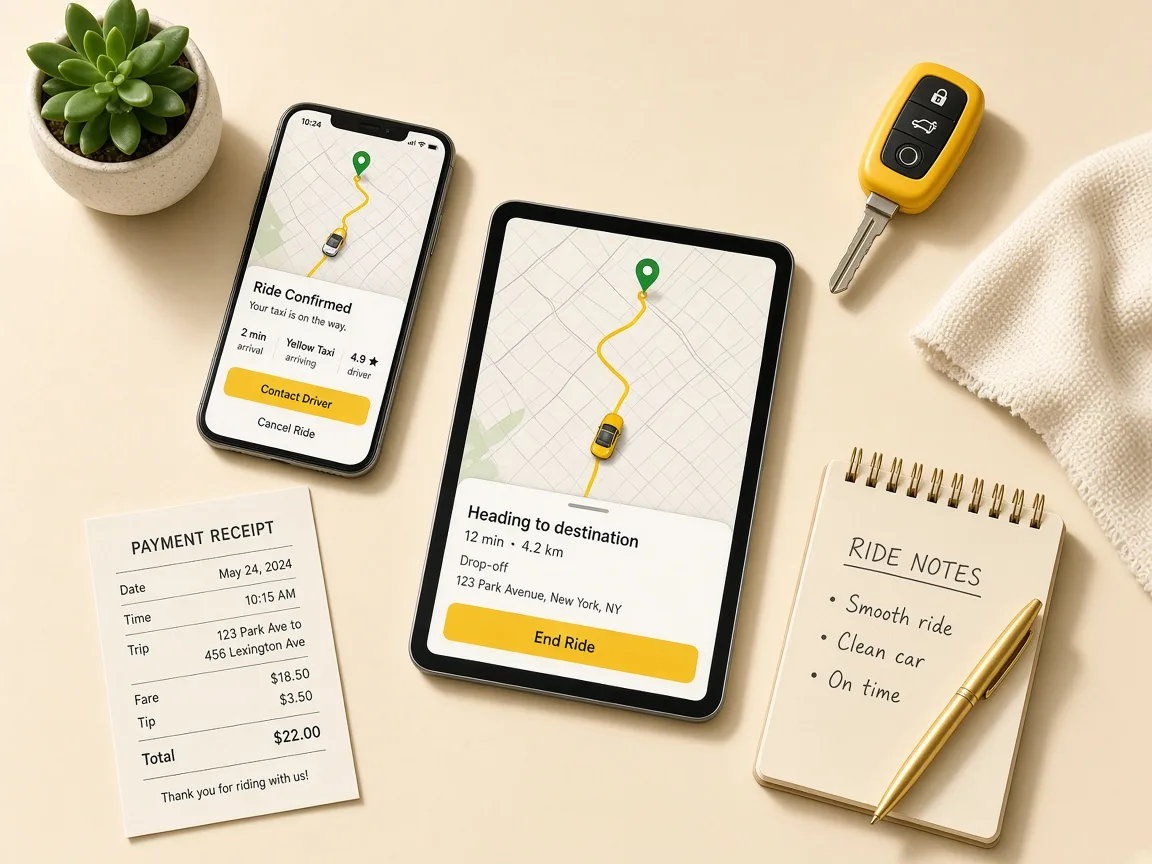
Ride requests reach nearby available drivers, and riders can follow driver arrival, trip progress, and route updates on a live map.
Payments and Trip Receipts
Riders can pay by card, wallet, or cash, and receive structured receipts covering fare breakdown, distance, waiting time, and applied charges.
Driver App and Earnings
Drivers can manage availability, accept requests, follow navigation, update trip status, and review daily and weekly earnings summaries.
Operations Dashboard
Operations teams gain central visibility into riders, drivers, vehicles, documents, bookings, fares, payments, and live trip activity.
Results
The On Demand Taxi Platform launched with connected rider, driver, dispatch, payment, and operations workflows. Riders could request rides, follow driver arrival, complete payments, and review trip history, while drivers and dispatch teams managed their respective activities through dedicated interfaces.
Centralised management tools gave operations teams clearer visibility into driver availability, vehicle documents, active trips, cancellations, fares, and payment activity. Dispatch teams also gained structured controls for assignment and monitoring, helping organise routine activity across a growing fleet.
Riders gained a more organised booking journey from location selection through trip completion. Clear fare estimates, driver details, live tracking, payment steps, and trip receipts helped users understand each stage without moving between disconnected experiences.
The platform created a flexible foundation for continued mobility development. Its architecture can support additional cities, vehicle categories, fare models, corporate accounts, scheduled bookings, and operational tools as the service expands.

Development Process
Explore
- Journey Mapping
- Mobility Research
- Requirement Analysis
- Wireframe Creation
- UI UX Design
- Flow Validation
Implement
- Frontend Development
- Backend Development
- API Development
- Mapping Services
- Payment Services
- Notification Services
Execute
- Functional Testing
- Performance Testing
- Security Review
- Production Setup
- Release Monitoring
- Journey Optimization
Typography & colors
Plus Jakarta Sans
ABCDEFGHIJKLMNOPQRSTUVWXYZ
abcdefghijklmnopqrstuvwxyz
1234567890
Primary
#CA8A04
Secondary
#EAB308
Tertiary Color
#FEF9C3
Icons Color
#64748B
Text Color
#0F172A
Background Color
#FFFFFF
App Visuals
RideNow
A taxi in minutes
Nearby
Choose your ride
Trip summary
Fare details
Live
Driver arriving
Trip #4482 · Toyota Camry
Track driverAlerts
Ride updates
Almost there
Create account
Tech Stack
React Native supported mobile experiences across rider and driver applications. Node.js powered backend services and APIs for accounts, bookings, fares, dispatch, payments, and trip records. PostgreSQL handled structured transactional data, while Socket.IO supported real time driver location and trip status updates. Google Maps Platform provided geocoding, routing, distance estimation, and navigation support, and Microsoft Azure provided cloud infrastructure, deployment, monitoring, and scalable application hosting.
- React Native
- Node.js
- PostgreSQL
- Socket.IO
- Google Maps Platform
- Microsoft Azure
Build A Complete On Demand Taxi Platform
Talk with Abhineh Infotech about building connected rider, driver, dispatch, payment, and operations experiences around your requirements.
Talk to Our Experts