
Case Study
Fleet Management Platform
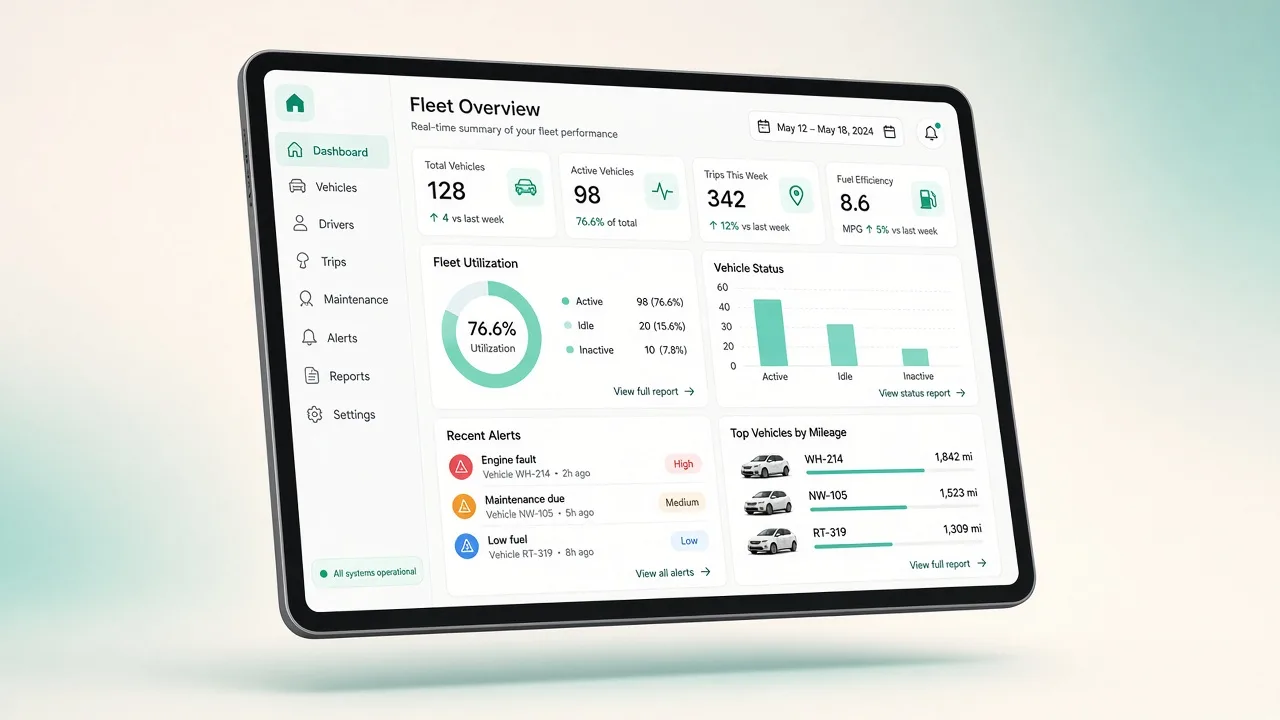
Fleet Management Platform gives operators one place to track vehicles, manage drivers, schedule maintenance, monitor compliance, and review fleet performance.
- 9 MonthsDelivery Timeline
- 14 SpecialistsProject Team
- 11 IntegrationsConnected Interfaces
Project Overview
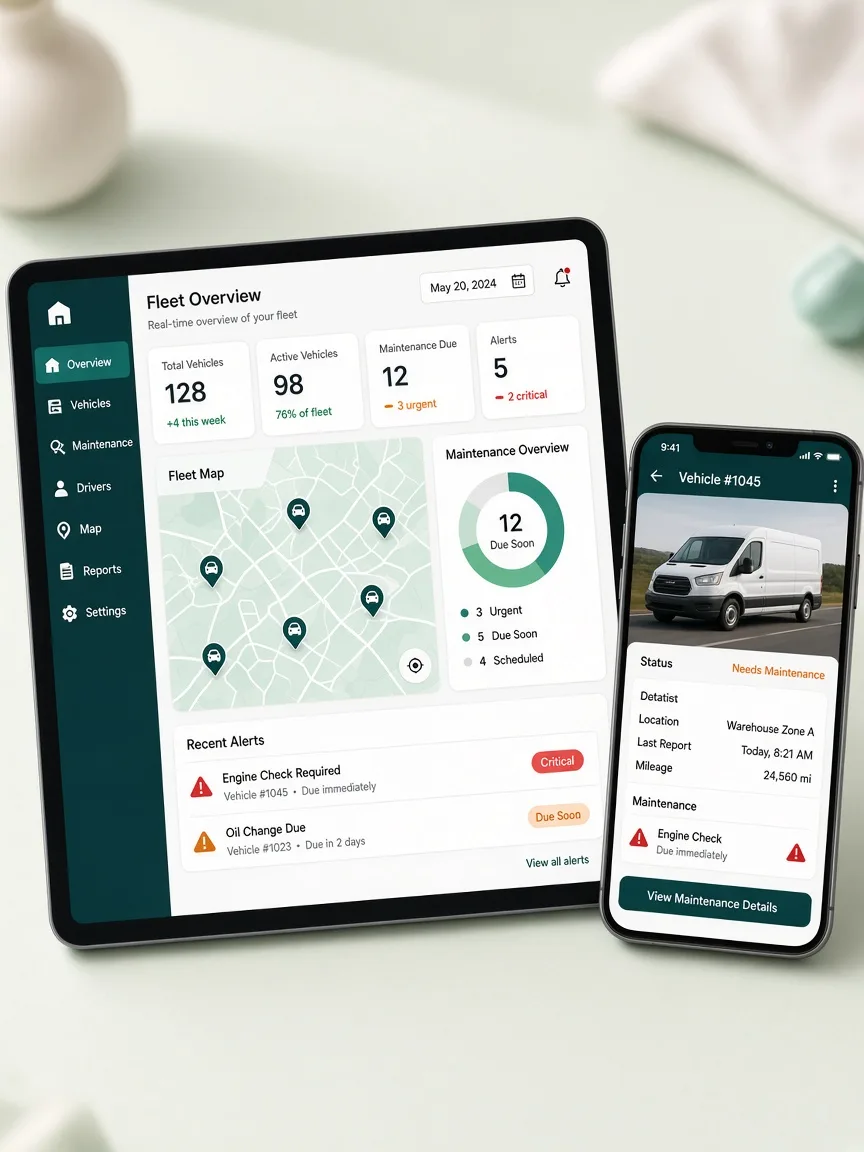
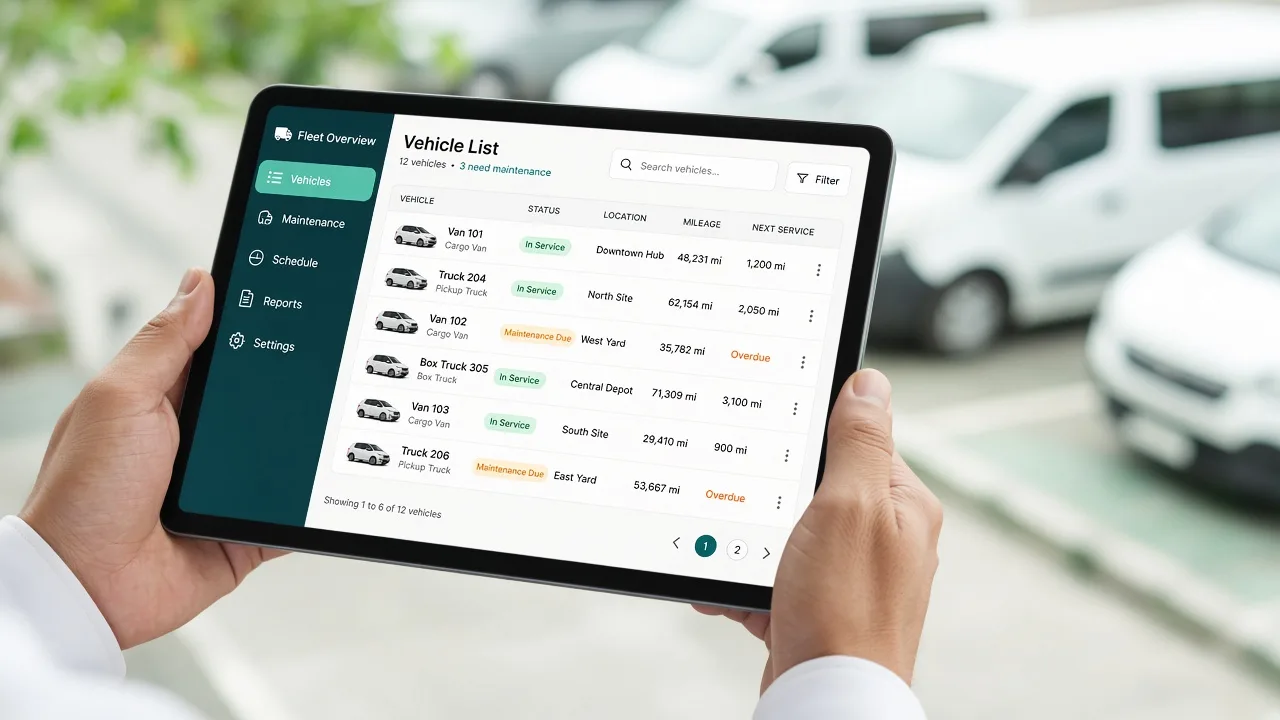
The Fleet Management Platform was built for a transportation operator managing a distributed vehicle fleet across multiple depots and service regions. Fleet managers can register vehicles, track live locations, assign drivers, schedule preventive maintenance, monitor fuel and expense records, review compliance documents, and analyse utilisation across the fleet. Drivers can view assigned vehicles and routes, complete pre trip inspection checklists, log trip details, report defects, and submit fuel and expense entries. Maintenance teams can manage work orders, service history, parts usage, and vehicle downtime, while management can review cost, utilisation, and safety reporting. Abhineh Infotech handled product planning, UI UX design, web and mobile development, backend services, telematics and mapping integrations, reporting, testing, and deployment.
Project Idea
The platform needed to connect vehicles, drivers, maintenance teams, and management while keeping tracking, servicing, compliance, and reporting workflows accurate and easy to operate.
Fleet operations generate continuous information from vehicles, drivers, trips, fuel purchases, inspections, repairs, and compliance documents. When these records live in separate spreadsheets, tracking portals, and workshop notes, managers lose the ability to see cost and downtime clearly. The platform needed one consistent structure that kept every operational stage connected and easy to follow.
Abhineh Infotech connected vehicle registration, live telematics tracking, driver assignment, inspection checklists, maintenance scheduling, work orders, fuel and expense logging, document compliance, and reporting through a unified architecture. Shared backend services allowed vehicle and driver information to move consistently between interfaces, helping maintenance teams act on defects while managers reviewed reliable operational data.
The product principle focused on clarity, accountability, and preventive action. Managers needed early warnings before failures and expiries, drivers needed short structured daily tasks, and maintenance teams needed organised work queues. The interface structure kept important actions visible while reducing unnecessary steps across the complete fleet lifecycle.
Challenges
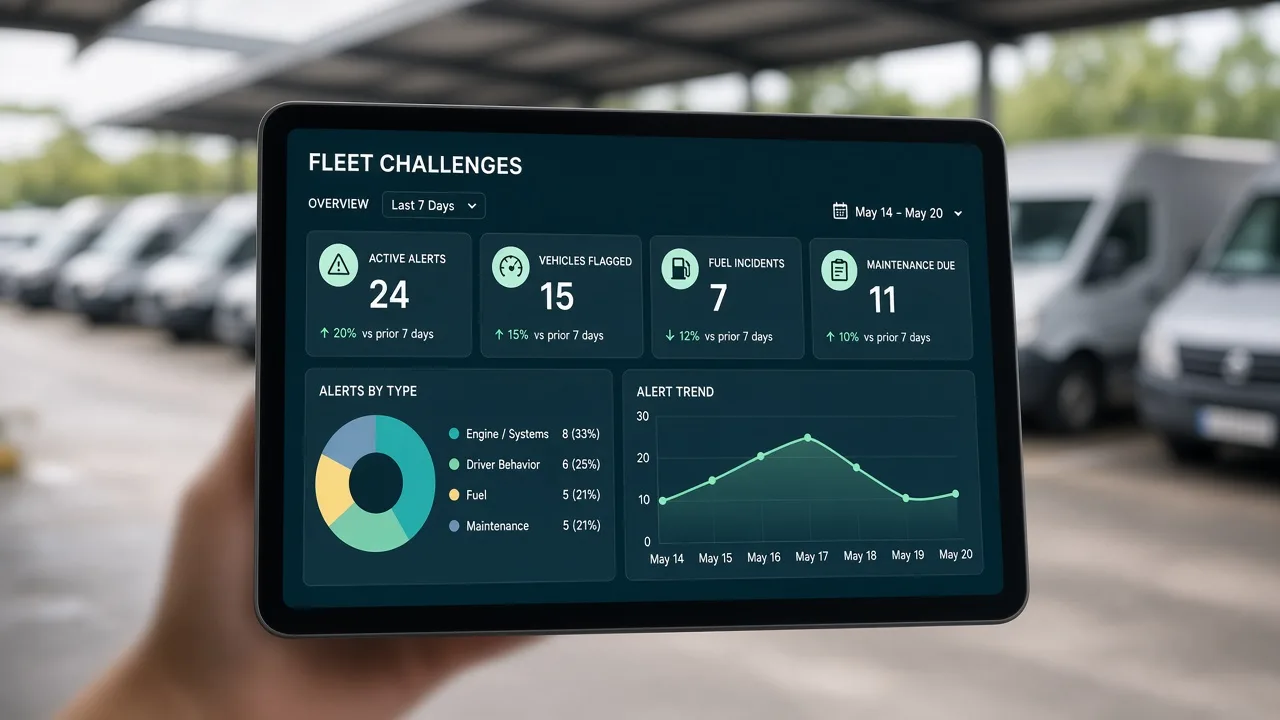
The platform supported fleet managers, dispatchers, drivers, maintenance staff, and management teams, each with different responsibilities and permissions. Managers required configuration and oversight, dispatchers needed assignment tools, drivers needed simple mobile tasks, maintenance staff needed work order controls, and management required consolidated reporting.
Data varied across vehicles, telematics readings, odometer values, driver records, licences and certifications, routes, trips, inspection results, defects, work orders, parts, fuel transactions, expenses, insurance documents, and depot assignments. The platform needed structured data management and search to keep high volume operational records accurate, queryable, and consistent.
Telematics devices report continuously across an entire fleet, and reporting queries often span months of history. The platform required efficient APIs, streaming location ingestion, search indexing, caching, scalable services, and reliable cloud infrastructure to maintain responsive tracking, maintenance, compliance, and analytics workflows as record volumes grew.
Project Milestones We Achieved
| Milestone | Tasks | Timeline | Responsible |
|---|---|---|---|
| Discovery and Planning | Mapped manager, dispatcher, driver, and maintenance journeys, defined vehicle data models, maintenance rules, compliance requirements, integrations, and technical architecture. | Month 1 | Product and Engineering Team |
| UI/UX Design | Designed fleet dashboards, live map views, vehicle profiles, driver management, inspection checklists, work order queues, and reporting interfaces. | Month 2 | UI UX Design Team |
| Core Development | Built authentication, vehicle and driver registries, telematics ingestion, assignment logic, maintenance scheduling, work orders, fuel and expense modules, APIs, and reporting services. | Month 3 to 6 | Application Development Team |
| Integrations and Testing | Connected telematics devices, mapping, fuel card, document storage, and notification services, validated maintenance and compliance flows, tested APIs, and performed functional and performance testing. | Month 7 to 8 | Integration and QA Team |
| Launch and Optimization | Prepared production infrastructure, migrated existing fleet records, completed final validation, monitored operations, and refined maintenance and reporting workflows. | Month 9 | Engineering and Delivery Team |
Project Features
The platform combines vehicle tracking, driver management, preventive maintenance, compliance monitoring, cost logging, and analytics to support the complete fleet management lifecycle.
Role Based Access and Depots
Managers, dispatchers, drivers, and maintenance staff receive role based access scoped to their depots, vehicles, and operational responsibilities.
Vehicle Registry and Search
Fleet teams can register vehicles with specifications, documents, and service history, then search and filter records by depot, status, or category.
Live Tracking and Trip Records
Telematics data drives live vehicle locations, route replay, idling and speed insights, and structured trip records linked to assigned drivers.
Fuel, Expense, and Cost Control
Fuel transactions, repair spend, and operating expenses are logged against vehicles to show cost per mile and per vehicle over selected periods.
Maintenance and Compliance Alerts
Service intervals, inspection results, defect reports, and document expiries generate scheduled alerts and work orders before vehicles fall out of compliance.
Fleet Analytics Dashboard
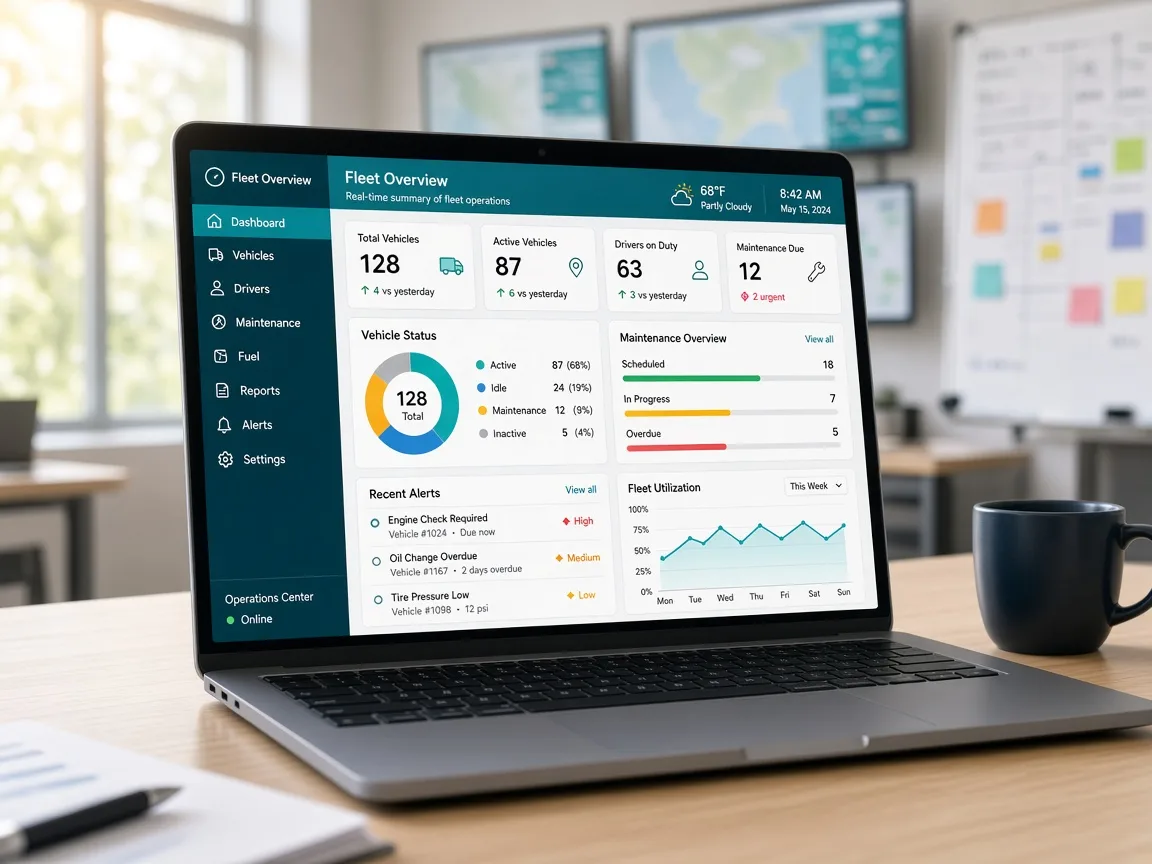
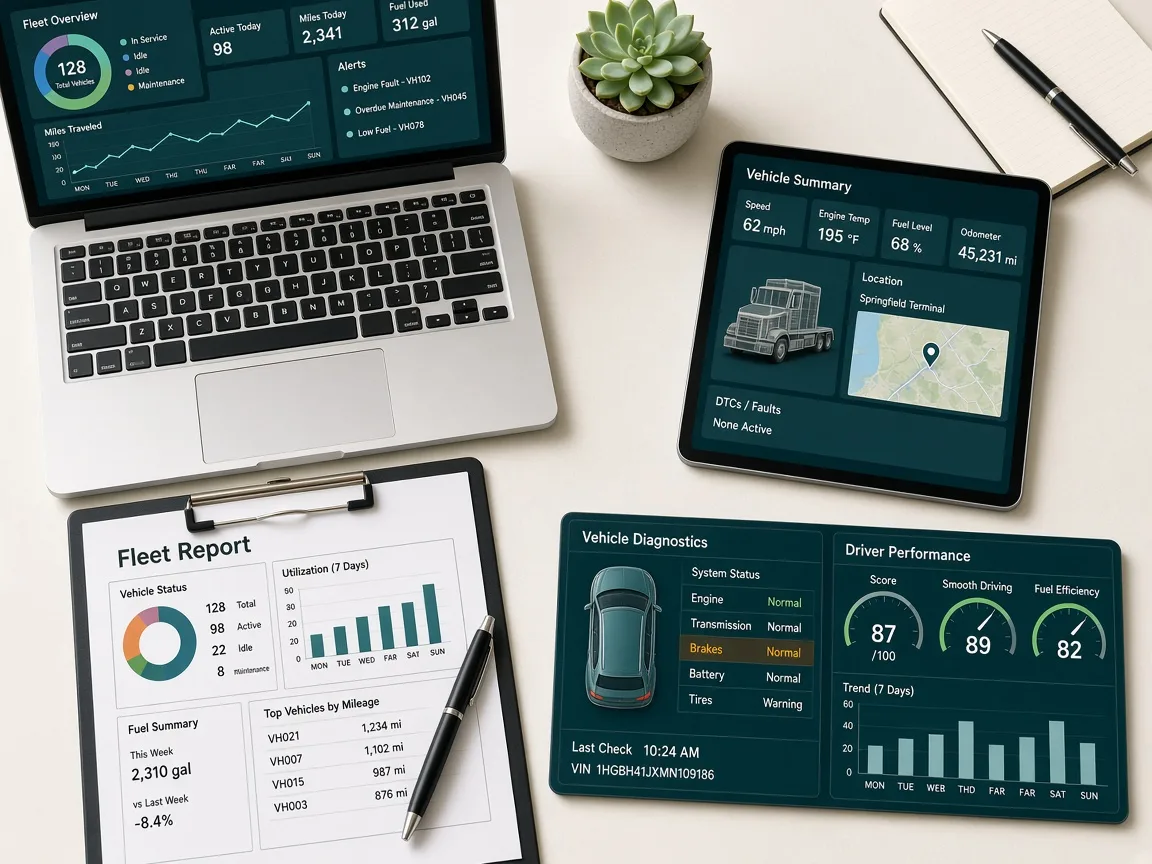
Management gains central visibility into utilisation, downtime, maintenance status, driver activity, cost trends, and overall fleet performance.
Results
The Fleet Management Platform launched with connected vehicle, driver, maintenance, compliance, and reporting workflows. Managers could track live vehicle activity, assign drivers, and schedule servicing, while drivers and maintenance teams completed inspections and work orders through dedicated interfaces.
Centralised management tools gave operations teams clearer visibility into vehicle status, maintenance schedules, open defects, document expiries, fuel spend, and depot level activity. Maintenance teams also gained structured work queues, helping organise routine servicing across a distributed fleet.
Drivers gained a simpler daily routine covering vehicle assignment, pre trip inspection, trip logging, defect reporting, and expense submission. Clear checklists and short structured forms helped field staff complete required records without switching between paper processes and separate tools.
The platform created a flexible foundation for continued fleet technology development. Its architecture can support additional depots, telematics providers, electric vehicle metrics, predictive maintenance models, and operational reporting as the fleet grows.

Development Process
Explore
- Journey Mapping
- Fleet Operations Research
- Requirement Analysis
- Wireframe Creation
- UI UX Design
- Flow Validation
Implement
- Frontend Development
- Backend Development
- API Development
- Telematics Services
- Mapping Services
- Notification Services
Execute
- Functional Testing
- Performance Testing
- Security Review
- Production Setup
- Release Monitoring
- Workflow Optimization
Typography & colors
Plus Jakarta Sans
ABCDEFGHIJKLMNOPQRSTUVWXYZ
abcdefghijklmnopqrstuvwxyz
1234567890
Primary
#0F766E
Secondary
#14B8A6
Tertiary Color
#99F6E4
Icons Color
#64748B
Text Color
#0F172A
Background Color
#FFFFFF
App Visuals
FleetOps
Every vehicle, one view
Live fleet
Active vehicles
Maintenance
Service due
Live
Defect reported
Truck 4417 · Brake warning
Create work orderAlerts
Compliance updates
Almost there
Create operator account
Tech Stack
Angular supported the fleet management web application with data dense dashboards, tables, and map views. Python Django powered backend services and APIs for vehicles, drivers, maintenance, compliance, and reporting. MySQL handled structured operational data, while Elasticsearch supported fast search and filtering across large volumes of vehicle, trip, and maintenance records. Microsoft Azure provided cloud infrastructure, deployment, monitoring, and scalable application hosting.
- Angular
- Python Django
- MySQL
- Elasticsearch
- Microsoft Azure
Build A Complete Fleet Management Platform
Talk with Abhineh Infotech about building connected vehicle tracking, driver, maintenance, compliance, and analytics experiences around your requirements.
Talk to Our Experts